Next: Conclusions Up: Lucky Exposures Previous: Isoplanatic angle for atmospheric Contents
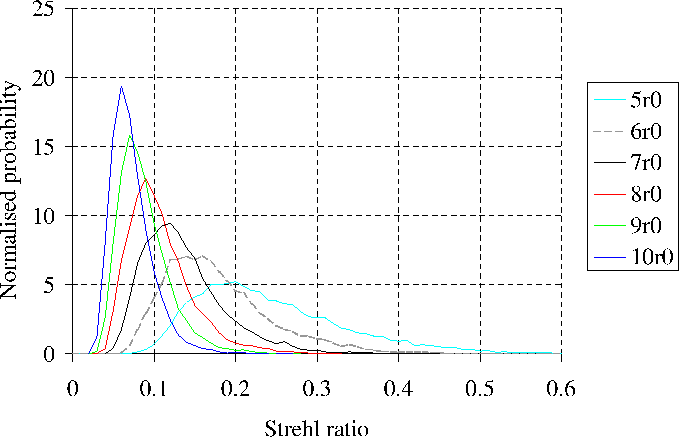
Figure 2.7 shows histograms of the measured
Strehl ratios for the short exposures simulated with a variety of
different aperture diameters (where the aperture diameter is described
in terms of the atmospheric coherence length  ). It is clear
that the probability of obtaining a high Strehl ratio short exposure
diminishes rapidly with increasing aperture size. If the investigator
chooses to select the best
). It is clear
that the probability of obtaining a high Strehl ratio short exposure
diminishes rapidly with increasing aperture size. If the investigator
chooses to select the best  of exposures of an unresolved source
using an aperture of diameter
of exposures of an unresolved source
using an aperture of diameter  , and to re-centred and co-add
these exposures, the final image will have a Strehl ratio of
, and to re-centred and co-add
these exposures, the final image will have a Strehl ratio of
 %--
%-- %. There will be approximately twice as much light in a
diffuse halo as is found in the core of the PSF. If the aperture
diameter is increased slightly to
%. There will be approximately twice as much light in a
diffuse halo as is found in the core of the PSF. If the aperture
diameter is increased slightly to  , the PSF core in the
selected exposures will be reduced slightly in diameter, but the
diffuse halo will contain five times as much flux as the image
core. For most imaging applications, the marginal gain in resolution
is more than offset by the increased flux in the wings of the PSF,
confirming that a
, the PSF core in the
selected exposures will be reduced slightly in diameter, but the
diffuse halo will contain five times as much flux as the image
core. For most imaging applications, the marginal gain in resolution
is more than offset by the increased flux in the wings of the PSF,
confirming that a  aperture represents the largest which
will provide high quality imaging using
aperture represents the largest which
will provide high quality imaging using  % of the short
exposures. If larger fractions of exposures are selected, it may be
beneficial to use a slightly smaller aperture diameter.
% of the short
exposures. If larger fractions of exposures are selected, it may be
beneficial to use a slightly smaller aperture diameter.
 |
It is of interest to compare these results to the model of
Fried (1978). He described the wavefronts entering a circular
aperture in terms of the phase variance
 from a
best-fitted planar wavefront. Using Monte Carlo simulations, Fried
calculated the probability that this variance
would be less than
from a
best-fitted planar wavefront. Using Monte Carlo simulations, Fried
calculated the probability that this variance
would be less than  . From these results he produced
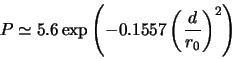
the following model for the probability
. From these results he produced
the following model for the probability  of good exposures:
 greater than
  . Englander et al. (1983)
compared the fraction of good images predicted by this model with the
fraction of Lucky Exposures observed in ground-based imaging experiments and found
agreement within the accuracy of the experimental measurements.
. Englander et al. (1983)
compared the fraction of good images predicted by this model with the
fraction of Lucky Exposures observed in ground-based imaging experiments and found
agreement within the accuracy of the experimental measurements.
The instantaneous Strehl ratio on axis
 obtained in
the image plane of a simple imaging system can be determined by
integrating the probability distribution for the wavefront phase
variance across the aperture plane to give:
obtained in
the image plane of a simple imaging system can be determined by
integrating the probability distribution for the wavefront phase
variance across the aperture plane to give:
For small values of
this on-axis Strehl ratio will
be approximately equal to the image Strehl ratio  which
we are interested in.
which
we are interested in.
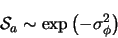
The criteria of selecting exposures when the phase variance
 , Equation 2.23 would imply an
image Strehl ratio
, Equation 2.23 would imply an
image Strehl ratio
 (taking the approximation that the
on-axis Strehl ratio represents the true Strehl ratio for the image).
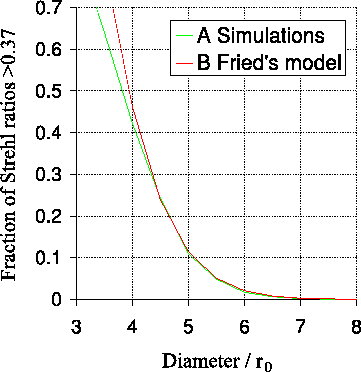
Figure 2.8 shows the fraction of exposures having a
Strehl ratio greater than
(taking the approximation that the
on-axis Strehl ratio represents the true Strehl ratio for the image).
Figure 2.8 shows the fraction of exposures having a
Strehl ratio greater than  in my simulations plotted against
Fried's model. There is excellent agreement for aperture diameters
greater than
in my simulations plotted against
Fried's model. There is excellent agreement for aperture diameters
greater than  .
.
 |
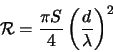
One measure of image quality which incorporates both the Strehl ratio
 and the diffraction-limited resolution of the telescope diameter
is the Strehl resolution
and the diffraction-limited resolution of the telescope diameter
is the Strehl resolution  , defined as:
 |
(2.24) |
If the best 1% of exposures are selected, Hecquet & Coupinot (1985) showed
that the Strehl resolution achieved is greatest for apertures with
diameters between and  . The Strehl resolution
decreases relatively quickly for apertures larger than . The
Strehl resolution does not represent a true measure of the image
resolution in this application as the FWHM of the PSF core
continues to get smaller with increasing aperture diameter beyond
. The Strehl ratio and image FWHM separately
provide a more useful description of the short exposure images, and I
will generally use these parameters in describing the quality of the
PSF.
. The Strehl resolution
decreases relatively quickly for apertures larger than . The
Strehl resolution does not represent a true measure of the image
resolution in this application as the FWHM of the PSF core
continues to get smaller with increasing aperture diameter beyond
. The Strehl ratio and image FWHM separately
provide a more useful description of the short exposure images, and I
will generally use these parameters in describing the quality of the
PSF.
Bob Tubbs 2003-11-14