Next: CCD measurements Up: Results from numerical simulations Previous: Results using model 2 Contents
 , and
we choose to treat all signals greater than
, and
we choose to treat all signals greater than
 as a
detected photo-electron, the fraction
as a
detected photo-electron, the fraction  of electrons which are
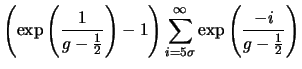
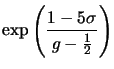
correctly discriminated from the noise will be given by a summation
over Equation 4.25:
of electrons which are
correctly discriminated from the noise will be given by a summation
over Equation 4.25:
 and
and  .
.
Under suitable operating conditions individual photo-electrons can be
detected efficiently above the noise - for example with a readout
noise of
 and a gain of
  the fraction of
photo-electrons detected would be
the fraction of
photo-electrons detected would be  . The effective quantum
efficiency of the device would be equal to the quantum efficiency for
photo-electron generation in the sensor array multiplied by this
factor. If the readout noise was Gaussian distributed, the number of
photon events attributable to the readout noise would be
. The effective quantum
efficiency of the device would be equal to the quantum efficiency for
photo-electron generation in the sensor array multiplied by this
factor. If the readout noise was Gaussian distributed, the number of
photon events attributable to the readout noise would be
 per pixel read out - lower than the sky background count
rate in most astronomical applications.
per pixel read out - lower than the sky background count
rate in most astronomical applications.
As with other photon counting systems, the performance of these devices is limited at high light levels by coincidence losses. The electron multiplying CCDs do not suffer from many of the problems which plague conventional photon-counting systems, such as a loss of sensitivity after detection of a photon in the vicinity of the photon event (except within the pixel and frame concerned). Basden et al. (2003) have shown that at light levels where photon counting becomes limited by coincidence losses, the signal-to-noise for optical flux measurements can be improved by applying a thresholding scheme to the output of the CCD.