Archeops
Archeops 2002-02-07 flight lift off with ancillary balloons attached
more...
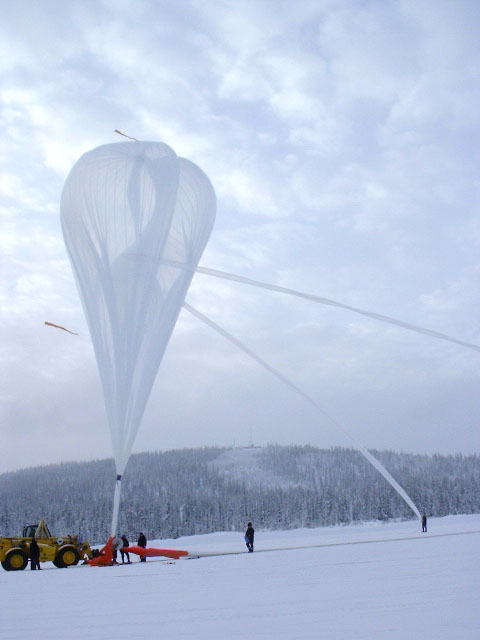
Archeops 2002-02-07 Inflation of the main balloon
more...
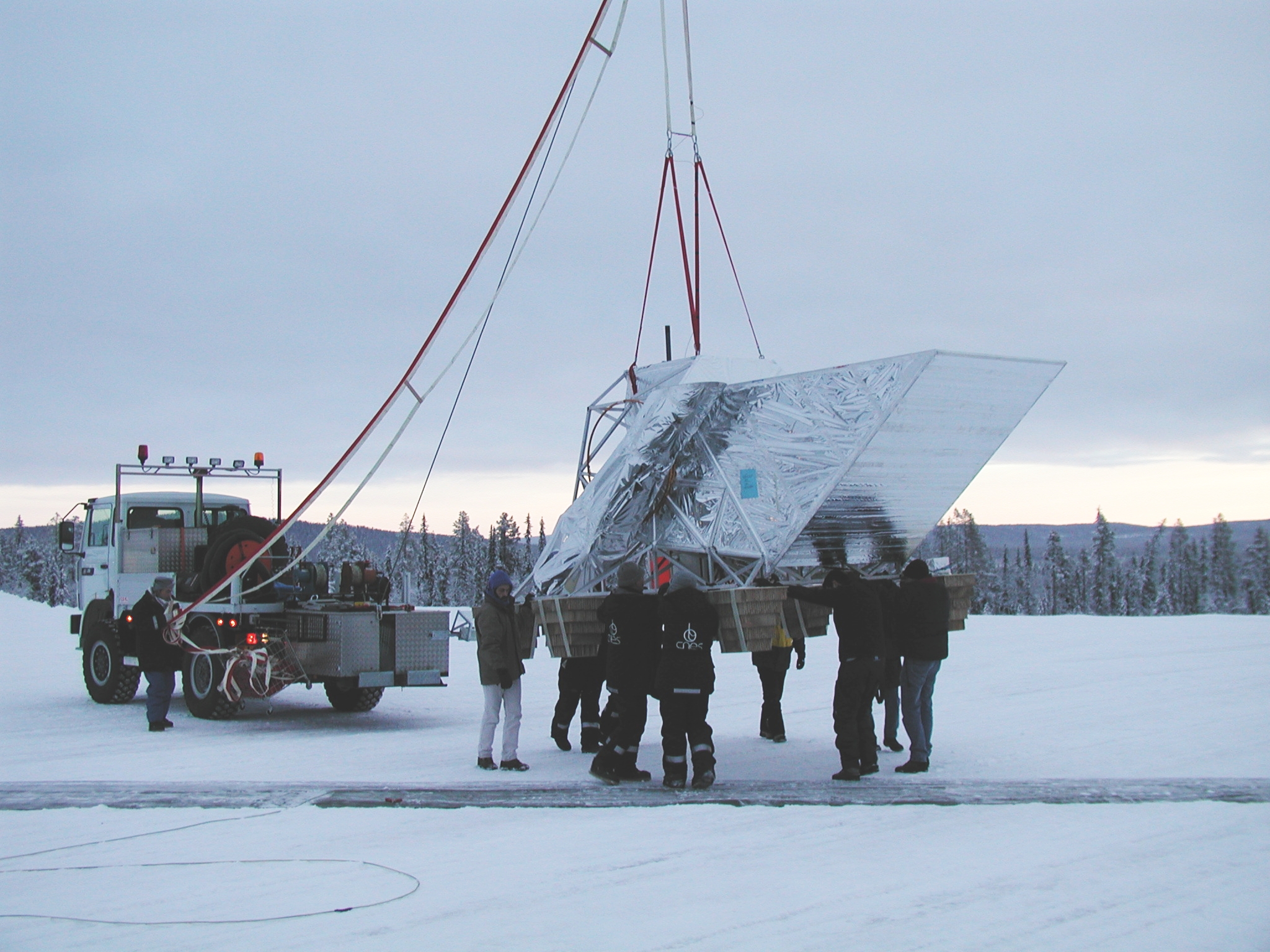
Archeops 2002-02-07 Preparation for flight as the experiment is guided into position.
more...
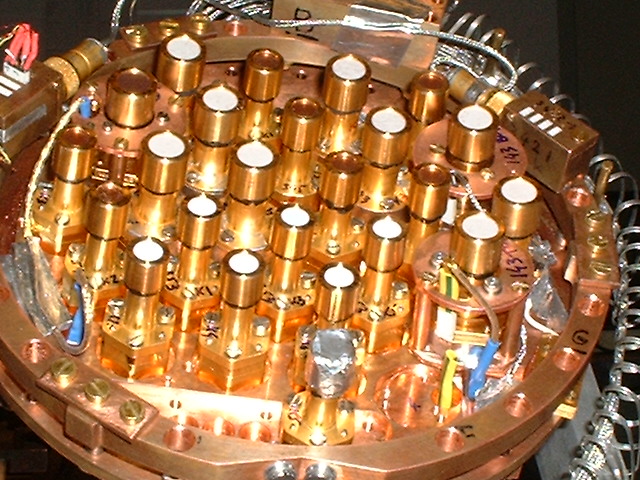
2000/2001 focal plan inside the cryostat
more...
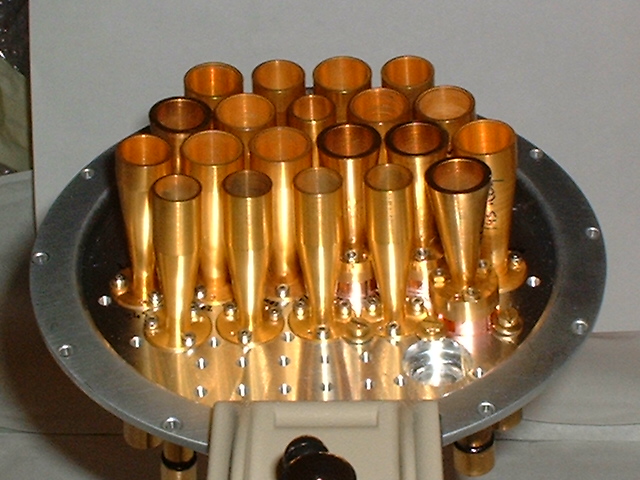
2000/2001 Feed Horn setup
more...
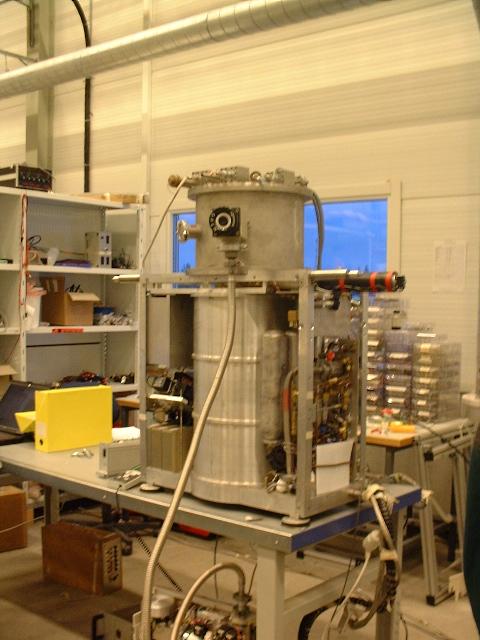
2000/2001 Cryostat calibration setup
more...
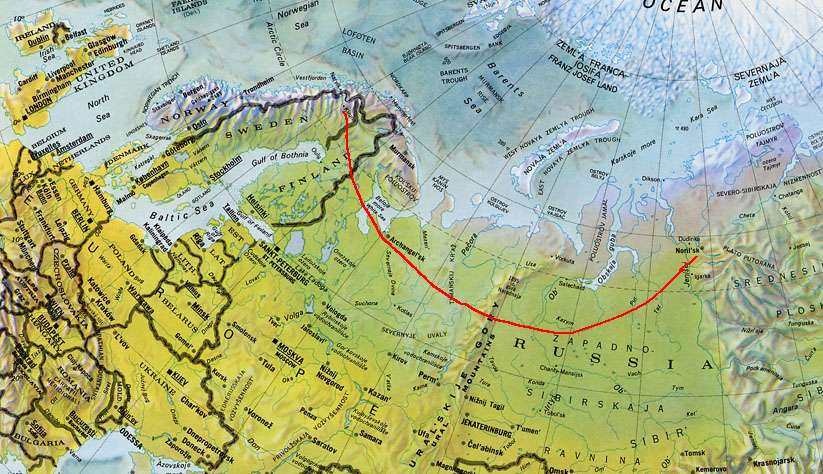
Archeops 2002-02-07 flight track map over Russia.
more...
OverviewThe Archeops balloon-borne CMB science experiment (1999–2002) was a French-led European collaboration designed to measure Cosmic Microwave Background (CMB) temperature anisotropies and polarization. To avoid atmospheric disturbances, the entire apparatus was mounted on a gondola beneath a helium balloon designed to reach altitudes of 40 kilometers. Operating from Kiruna, Sweden, the instrument conducted its observations during 24-hour Arctic-night flights, mapping high-resolution (8') temperature anisotropies over a large fraction (25%) of the sky in the millimeter domain. Archeops utilized technology based on the Planck High Frequency Instrument. The setup featured bolometers cooled to a temperature of 0.1 K (100 mK), which were placed at the focus of a warm telescope. These highly sensitive devices scanned the sky in total power mode by making large circles at a constant elevation. During its flights, Archeops observed a complete annulus on the sky across four specific frequency bands. This configuration provided an expected sensitivity to CMB fluctuations of 100 μK for each of the 90,000 averaged 20-arcminute pixels. The instrument's operational history spanned several years, beginning with its design and baseline performance being validated during an initial test flight from Trapani, Sicily, to Spain in July 1999. This was followed by additional test flights launched from Kiruna in March and April 2000. The mission then culminated in three dedicated scientific flights, all launched from Kiruna in January 29, 2001, January 17, 2002, and February 7, 2002. The Archeops name is not a traditional acronym. Arche: refers to the study of the archetypal or fundamental structures of the early Universe. Ops: refers to a balloon-borne optical or operational instrument mapping optical power and sky sources. Experiment Information:
The archived Archeops website can be viewed HERE. |