MSAM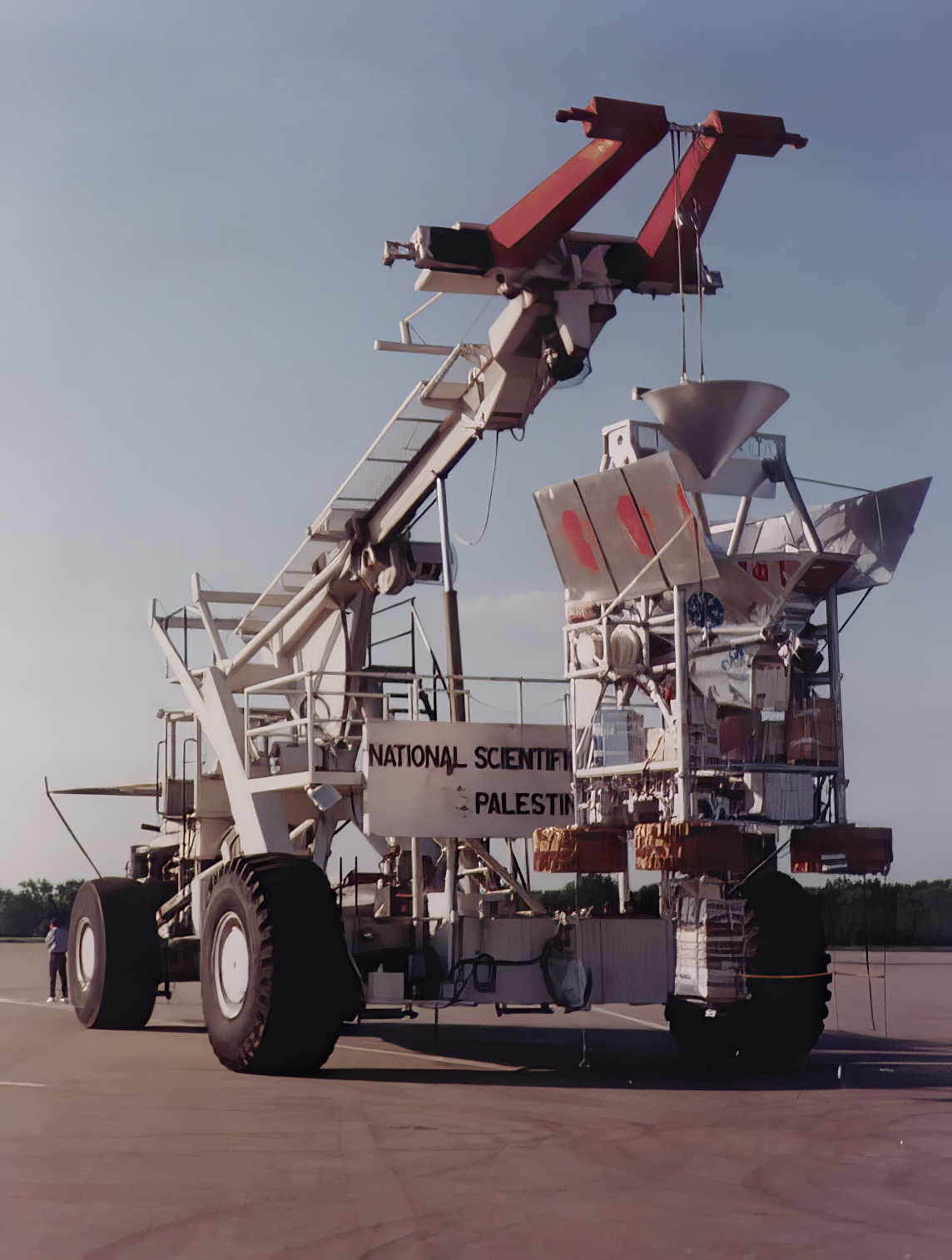
MSAM1 on launch vehicle known as "Tiny Tim", June 1994.
more...
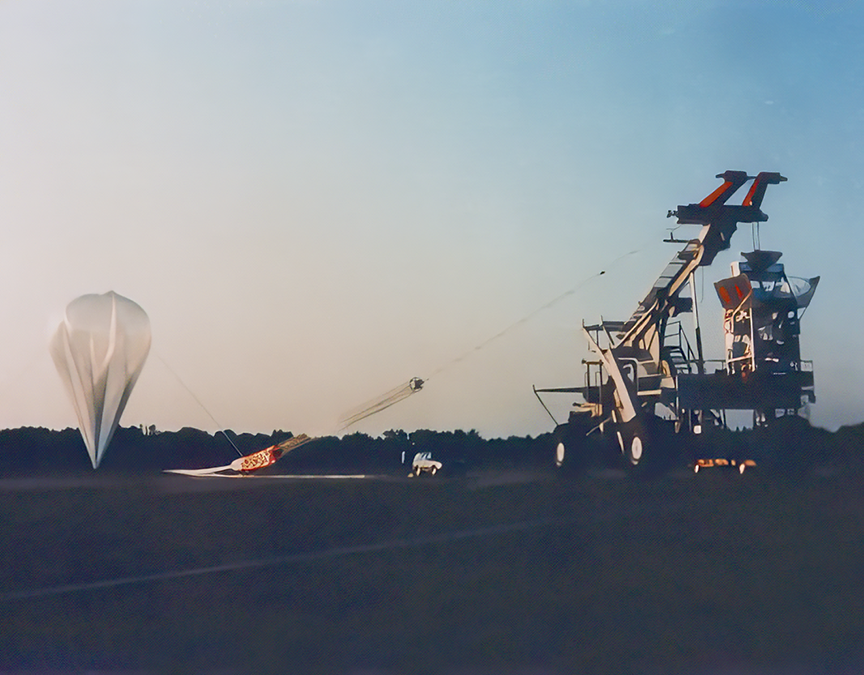
MSAM1 and balloon moments prior to launch, June 1994.
more...
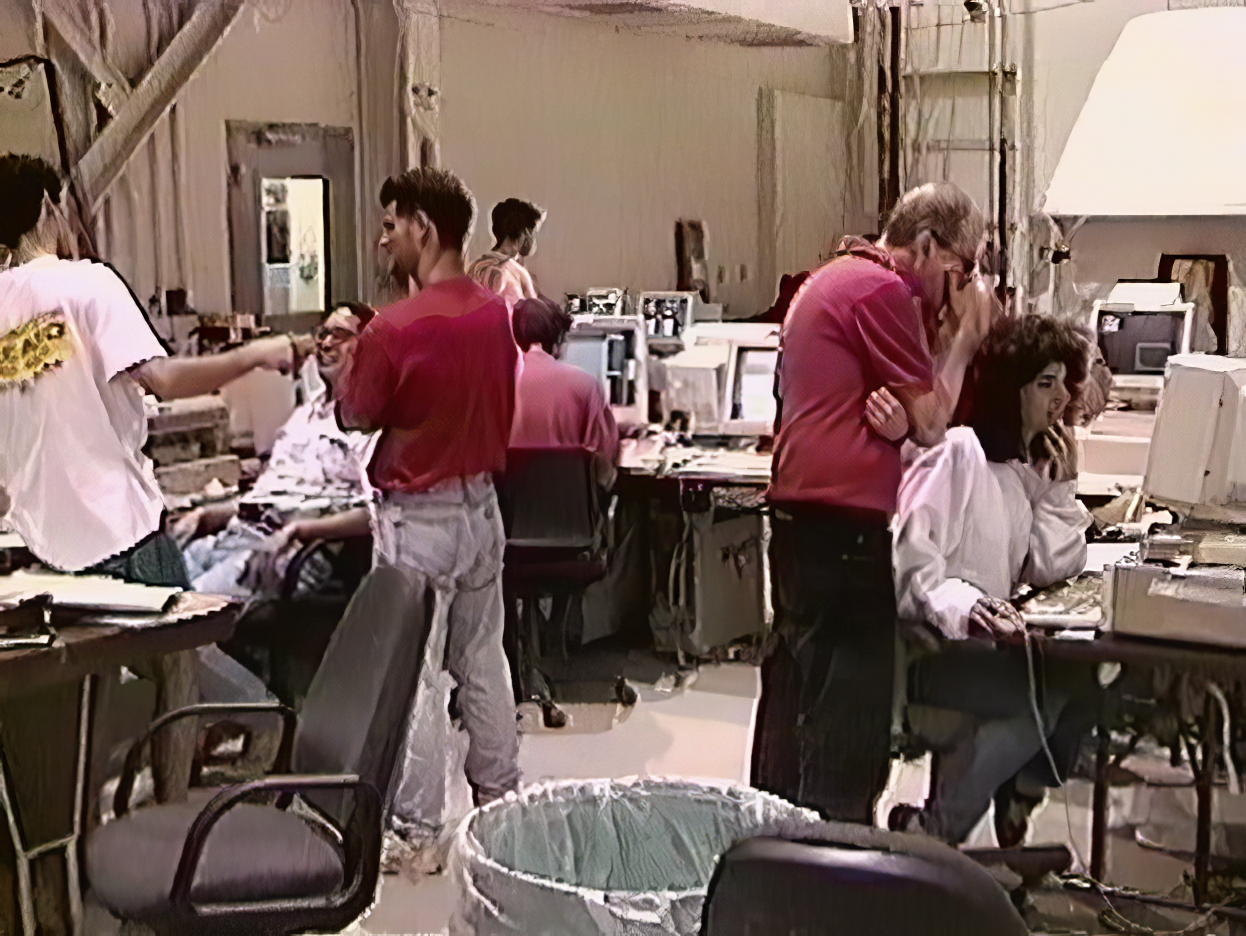
The MSAM crew in the highbay. Gondola control and real-time data analysis were performed here. This picture was taken about 1 hour into ascent, while the balloon is passing through the tropopause, June 1994.
more...
Images Courtesy of the MSAM/TopHat TeamOverviewMSAM (Medium-Scale Anisotropy Measurement) was a balloon-borne telescope and bolometric radiometer designed to probe the CMB anisotropy at angular scales near 0.5 degrees. The first instrument (MSAM1) had four spectral channels between 5 and 23 icm (i.e. 150 and 700 GHz, or 2.0 and 0.4 mm). The multiple frequencies were used to separate Galactic dust emission from the CMB signal. The first flight of this package (MSAM1-92 : June 1992 from Palestine, TX) resulted in a detection of 0.5 x 10⁻⁵ Results for the medium-scale CMB anisotropy derived for this region of the sky were independently confirmed by the Princeton SK experiment. This confirmation occurred at a much lower frequency enabling the MSAM team to rule out certain foreground contamination as a possible source of signal. The final flight (MSAM1-95: June 1995 from Palestine, TX) observed an independent patch of sky, more than doubling the sky coverage of the previous two flights. The results from all three flights of MSAM1 were published, as well a final combined analysis. Experiment Information:
The archived MSAM website can be viewed HERE. |